
The Golden Triangle Investment Case for UK Buyers: Vilamoura, Vale do Lobo and Quinta do Lago
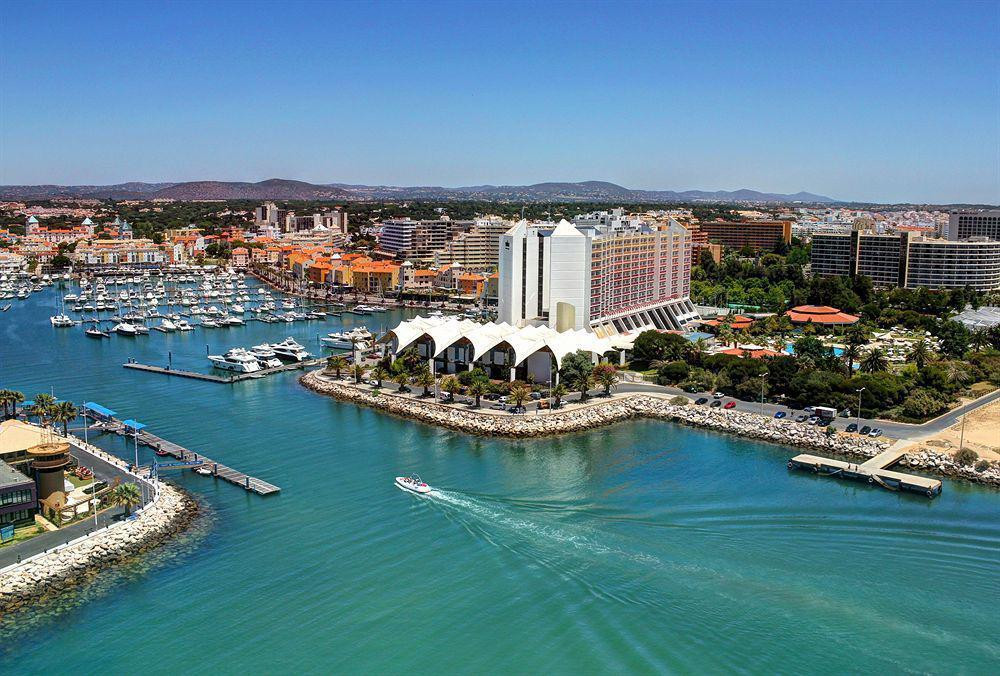
The Algarve’s Golden Triangle, the prime residential corridor running between Faro and Albufeira, has established itself as the centre of British property activity in southern Portugal. Pricing across its three resorts, Vilamoura, Vale do Lobo and Quinta do Lago, is shaped less by short-term sentiment and more by long-term structural factors: limited expansion potential, concentrated international demand, and resort infrastructure built around mature golf, marina and beach assets.
For UK buyers, this structural backdrop matters because the three resorts, while geographically clustered, no longer behave as substitutes. The pricing gap between them has widened materially over the last 24 months, and headline budgets translate into very different property types, rental profiles and capital-preservation cases depending on which resort is selected. British and Irish buyers have, in recent years, accounted for around 71% of activity in the prime Algarve segment, with Vale do Lobo alone reporting roughly two-thirds British purchasers, which means the decision between the three locations is one a meaningful share of UK capital considering portugal property is currently working through.
In this guide, we set out how Vilamoura, Vale do Lobo and Quinta do Lago compare on pricing, rental performance and buyer fit, based on market conditions in 2025 and so far in 2026.
How the Three Resorts Are Priced in 2026
From a pricing perspective, the three resorts now occupy distinct tiers rather than overlapping bands. Quinta do Lago, in early 2026, averages around €11,170 per square metre, having risen by roughly 35% year-on-year on the back of constrained stock and persistent northern European demand. Vale do Lobo runs at approximately €7,712 per square metre, while Vilamoura covers a wider band, broadly between €5,000 and €9,000 per square metre depending on whether the property sits marina-side, in the Old Village, or further inland near the Pinhal or Millennium courses. For context, the regional Algarve average sits at around €3,400 to €3,600 per square metre, which places all three resorts firmly within the prime tier rather than the broader regional market.
In practical terms, this translates into very different entry points. Vilamoura accommodates marina-area resale apartments from around €225,000, new-build apartments from around €260,000, three-bedroom townhouses near the golf courses from around €700,000, and detached villas with pools generally from €1 million upwards. Vale do Lobo rarely transacts below €1 million for a villa of meaningful size, with apartment stock around €3,000 per square metre and built villa pricing closer to €7,000 per square metre. Quinta do Lago is the most concentrated at the top of the market: refurbished villas near the lake or beach commonly start above €1.2 million, the bulk of stock sits between €2 million and €5 million, and frontline-golf or lakefront properties extend significantly beyond that.
It is important to note that the headline gap between Vilamoura and Quinta do Lago is now closer to a multiple than a margin. For UK buyers, the question worth asking is no longer simply which resort, but which resort matches the role the property is meant to play.
Vilamoura – Multi-Budget Access in the Largest Resort of the Three
Vilamoura is the broadest of the three markets, both in terms of physical footprint and inventory range. The resort is more than double the combined size of Vale do Lobo and Quinta do Lago, anchored around a working marina, two casinos, an established restaurant and retail base and several golf courses. As a result, Vilamoura functions year-round in a way the other two resorts do not, which has direct consequences for liquidity, occupancy and resale depth.
From an investment perspective, this scale supports a wider stock profile. Apartments, townhouses and villas are all available within the same resort, and pricing spans a range that few other Algarve locations replicate. Gross short-term rental yields on well-managed Vilamoura units typically run between 5% and 8%, with the upper end achievable on marina-front and golf-side stock. For UK buyers seeking a property that performs across more of the year rather than only the summer peak, Vilamoura tends to be the more flexible starting point.
It is important to note that Vilamoura’s breadth is also its limitation in the prime segment. Inventory is more abundant than in Vale do Lobo or Quinta do Lago, and differentiation at the lower end is often defined by interior finish, terrace size or precise location within a development rather than by scarcity of comparable stock.
Vale do Lobo – Established Villa Market with a Concentrated Buyer Base
Vale do Lobo occupies a different position in the corridor. The resort is quieter, more residentially focused, and built around the Royal and Ocean golf courses, the tennis academy and direct access to a Blue Flag beach. Stock is dominated by villas with a smaller cluster of apartment complexes, and the buyer base is unusually concentrated by national origin, with British purchasers historically forming the majority of transactions.
By contrast with Vilamoura, the apartment-driven entry point is largely absent, and the practical floor for a meaningful villa purchase tends to sit above €1 million. Yields, where properties are made available for short-term rental, typically run between 6% and 9% gross, supported by lower overall supply rather than higher absolute occupancy. For this reason, Vale do Lobo tends to suit buyers prioritising a settled lifestyle profile, beach proximity and a known resale network over the higher-density, year-round rhythm of Vilamoura.
Quinta do Lago – Supply-Constrained Luxury at the Top of the Corridor
Quinta do Lago is the most exclusive of the three resorts, and the most expensive. Adjacent to the Ria Formosa nature reserve and built around three championship-grade golf courses, the campus is tightly controlled, architecturally homogeneous and supply-constrained by design. The recent year-on-year price acceleration is largely a function of that constrained stock running into reliable international demand, rather than speculative flow.
From an investment perspective, the dynamic at Quinta do Lago is distinct from the other two resorts. Absolute weekly rental rates are strong, but yields in percentage terms are often lower, since the underlying capital values are materially higher. Buyers at this level are typically trading across from Vale do Lobo, or arriving with a defined brief: large plot, premium build, low-density setting, frontline golf or lake. As a result, the resort tends to function less as a yield play and more as a long-term capital and lifestyle position within a supply-constrained market.
The Rental Picture and AL Licensing Context
Any UK buyer underwriting a rental case across the three resorts should also consider the regulatory backdrop. Portugal’s national moratorium on new Alojamento Local short-term rental licences was lifted in late 2024 under Decree-Law 76/2024, and applications are again being accepted across the Algarve, subject to municipal-level rules. That removes a key overhang from yield assumptions, but the regulatory picture is still evolving, and individual councils retain the ability to set local restrictions. Current yields are therefore best treated as supportable but not fixed, and any rental projection would typically be stress-tested against a tighter regulatory regime in the next cycle.
Alongside this regulatory point, sterling-to-euro volatility, materially higher Portuguese mortgage rates than UK base rates, and the recent compression of the yield case at Quinta do Lago all sit as factors UK buyers would generally be expected to price in before committing capital across the corridor.
How the Three Resorts Compare for UK Buyers
The differences between Vilamoura, Vale do Lobo and Quinta do Lago are not purely linear increases in price. Instead, they reflect shifts in market segment, buyer intent and inventory structure.
At Vilamoura, UK buyers gain access to a broad, multi-budget resort with strong year-round rental dynamics and the deepest pool of comparable stock. At Vale do Lobo, the market narrows into an established villa-led segment with a concentrated, predominantly British buyer base and tighter supply. At Quinta do Lago, the focus moves firmly into supply-constrained luxury, where scarcity, design and plot quality define value more than rental yield.
One of the most important observations is that the largest qualitative jump occurs between Vilamoura and Vale do Lobo, where the move is from a multi-budget resort with active apartment stock to a villa-dominated, lower-supply market with a higher practical floor. The move from Vale do Lobo to Quinta do Lago, while significant in capital terms, is more about scale, exclusivity and architectural control than a fundamental change in resort character.
Choosing the Right Resort in the Golden Triangle
The Golden Triangle remains one of the most resilient property corridors in southern Europe because each of its three resorts offers something the others do not: breadth, settled villa exposure, or supply-constrained luxury.
For UK buyers, this means that the decision between Vilamoura, Vale do Lobo and Quinta do Lago is best framed by intended use rather than by headline budget alone. Those seeking a flexible holiday property with realistic rental potential across more of the year typically gravitate towards Vilamoura, where stock and price spread are widest. Buyers focused on a settled, villa-led lifestyle within a known British community often find Vale do Lobo the better fit, particularly where rental yield matters but is not the primary driver. Quinta do Lago tends to suit buyers with a defined luxury brief and a longer holding horizon, where capital preservation and asset quality outweigh short-term yield considerations.
In many cases, UK buyers begin in Vilamoura and move further along the corridor as the way the property is used changes. The relative pricing across the three resorts often gives sterling buyers more optionality than the headline figures suggest, particularly where a first purchase is being made with rental income in mind and a future move-up purchase is anticipated.