
Why Faro Is the Most Overlooked City in the Algarve Property Market (2026)
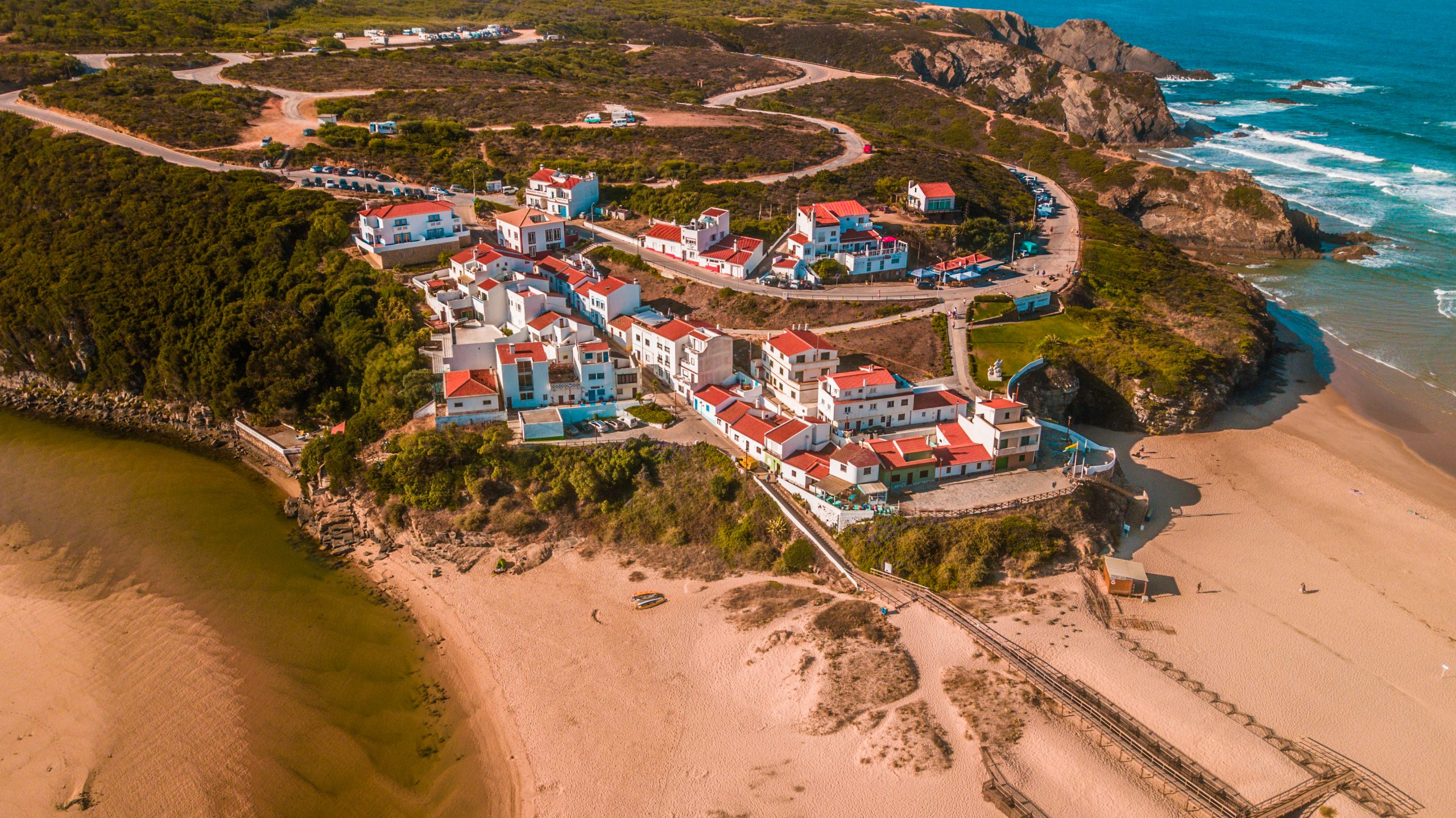
Faro is emerging as the most overlooked city in the Algarve property market, offering significantly lower prices, strong rental potential, and year-round livability.
This guide explores why buyers are starting to see its true value in 2026.
International property buyers in the Algarve rarely start their search in Faro. Lagos, Tavira, Albufeira, Vilamoura, Quinta do Lago, these are the names on the first-page Google results, the brochure covers, and the expat conversation. Faro tends to enter the conversation only as the airport code.
It is one of the oddest gaps in the Algarve market. Faro is the regional capital, the largest city, the administrative and university centre, and the practical hub of infrastructure along the coast. It has an old town, a historic marina, and a ten-minute drive to a lagoon protected by national park status. And in 2026, its property prices sit materially below comparable coastal Algarve locations, for reasons that are worth examining.
How Faro Compares in 2026
Average sale prices in Faro in early 2026 are running at around €3,100 per square metre across the city, with the old town and the marina edges pushing above €4,000 and outer residential areas below €2,400.
By contrast, average prices in the same period are closer to €5,000 in Lagos, €4,500 in Albufeira old town, and above €6,000 in Vilamoura. Tavira runs between €4,000 and €4,500 for comparable modern stock.
The gap is not 5% or 10%, it is 30% to 40% for comparable quality. For a buyer evaluating €600,000 of budget, that difference funds either a substantially larger property in Faro or the same property with meaningful financial headroom.
What You Actually Get in Faro
The city has three distinct property markets, and a buyer’s view of Faro depends heavily on which one they look at.
The old town (Vila Adentro and the streets immediately outside its walls) is the most architecturally interesting part of the city. Restored townhouses here, two or three floors, run between €480,000 and €900,000 depending on size, state, and outdoor space. Most need work. Renovation economics in Faro’s old town in 2026 are tighter than in Lagos, expect €1,200 to €1,800 per square metre fully finished, because the contractor market is smaller and permitting is slower.
The modern apartment market concentrates in Faro’s Bairro das Pedras and along Avenida 5 de Outubro. Two-bedroom apartments in buildings less than 15 years old trade between €280,000 and €440,000 in 2026. Newer developments near the University of the Algarve, driven partly by student rental demand, sit slightly higher.
Outside the city itself, the villa market runs across Estoi, Santa Bárbara de Nexe, and the hills inland. Here, three-bedroom detached villas on small plots of 1,000 to 2,000 square metres with pools are available between €550,000 and €900,000, a price point that buys considerably less in Quinta do Lago twenty kilometres to the west.
Why the Gap Exists
Faro is priced the way it is for reasons, not oversight. Understanding them matters.
The tourism profile is different. Faro is not primarily a beach destination. The Ria Formosa, while spectacular, is a national park rather than a tourist beach, and the closest conventional beach is a 20-minute drive or a ferry ride to the barrier islands. Buyers who rank beach-within-walking-distance highly tend to keep moving.
The airport is double-edged. Within 10 minutes of the airport is convenient, but the noise corridor is a real limitation for properties under the approach and departure paths. Buyers screening for peace should understand which streets sit under these paths. The majority of Faro does not, but some of the cheapest property coincides with the noisiest areas, which is not a coincidence.
The rental economics are different. Faro does not carry the same short-term holiday rental yield as Lagos or Albufeira. The visitor base is thinner in shoulder months, and Alojamento Local rental rates in the city centre are meaningfully lower than equivalent units further west.
The stock is less new. Modern development has favoured coastal towns; Faro’s residential construction has lagged, meaning the stock is older on average, and the share of new builds is lower.
Who Faro Actually Suits
Faro fits a specific buyer profile well and the wider Algarve market poorly. The fit is strongest for year-round residents rather than second-homers; Faro has functioning urban life in November, restaurants open, shops staffed, streets alive, where many Algarve resort towns do not.
It also suits buyers who rank amenities higher than beach. The city has an airport, hospitals, a university, a covered market, and the widest range of everyday retail in the Algarve. This matters more over a decade than it matters over a holiday.
Long-term rental investors benefit too. Faro’s rental yield on mid-market apartments tracks above the coastal average because demand from students, healthcare workers, airport staff, and local professionals is continuous and year-round.
It also suits buyers whose budget is under €600,000 and who still want a meaningful home. The price ceiling in Faro does not compromise meaningfully until very high budgets, unlike Lagos, where the €500,000 to €700,000 band now delivers materially less property than it did three years ago.
What to Watch Before Buying
Three things make the difference between a good Faro purchase and a poor one.
First, position relative to the flight path. Three streets of difference in Bairro das Pedras can shift nightly noise exposure substantially. Arrive in the property at 9 pm on a summer Saturday, the busiest slot for Ryanair and easyJet, before you decide.
Second, the old town’s rhythm. Restored townhouses in Vila Adentro are beautiful but on narrow cobbled streets with limited parking and, in some, restaurant terraces until midnight. A visit during a weekday lunchtime gives a different picture than a Sunday morning.
Third, the condominium state for older apartments. Many 1980s and 1990s buildings in Faro have deferred works. The gap between asking price and net cost after renovation contributions can be meaningful, and it is not always disclosed upfront.
The Case Quietly Being Made
As Lagos and Tavira have compressed further in 2024 and 2025, the value proposition of Faro has sharpened, not because the city has changed, but because the relative comparison has. A buyer walking the Ribeirinha on a Wednesday evening in 2026, with the old town lit and the marina active, is walking a coastal capital that costs meaningfully less than the town 60 kilometres either side.
At Portugal Property Hub, we don’t think Faro is for everyone. We think it is for a particular kind of buyer, and we think that particular buyer is currently getting better value than almost anywhere else in the Algarve.